Introduction
Biostatistics has long served as the backbone of biomedical research — offering powerful tools for experimental design, data interpretation, and hypothesis testing. However, the rise of Artificial Intelligence (AI) is rapidly transforming this traditional discipline.
Today, AI-driven algorithms can process massive amounts of biomedical data — from gene expression profiles to clinical imaging — much faster and often more accurately than conventional statistical methods.
In this article, we explore how AI and biostatistics are merging to create new opportunities for disease prediction, personalized medicine, and public health decision-making. We’ll also discuss real-world examples, statistical comparisons, and the ethical challenges of using AI in life sciences.
1. What is Biostatistics?
Biostatistics applies statistical techniques to understand and analyze biological data. It provides methods to draw conclusions from experiments, clinical trials, and epidemiological studies.
Key functions of biostatistics include:
- Designing biological experiments
- Analyzing clinical trial data
- Measuring disease risk and prevalence
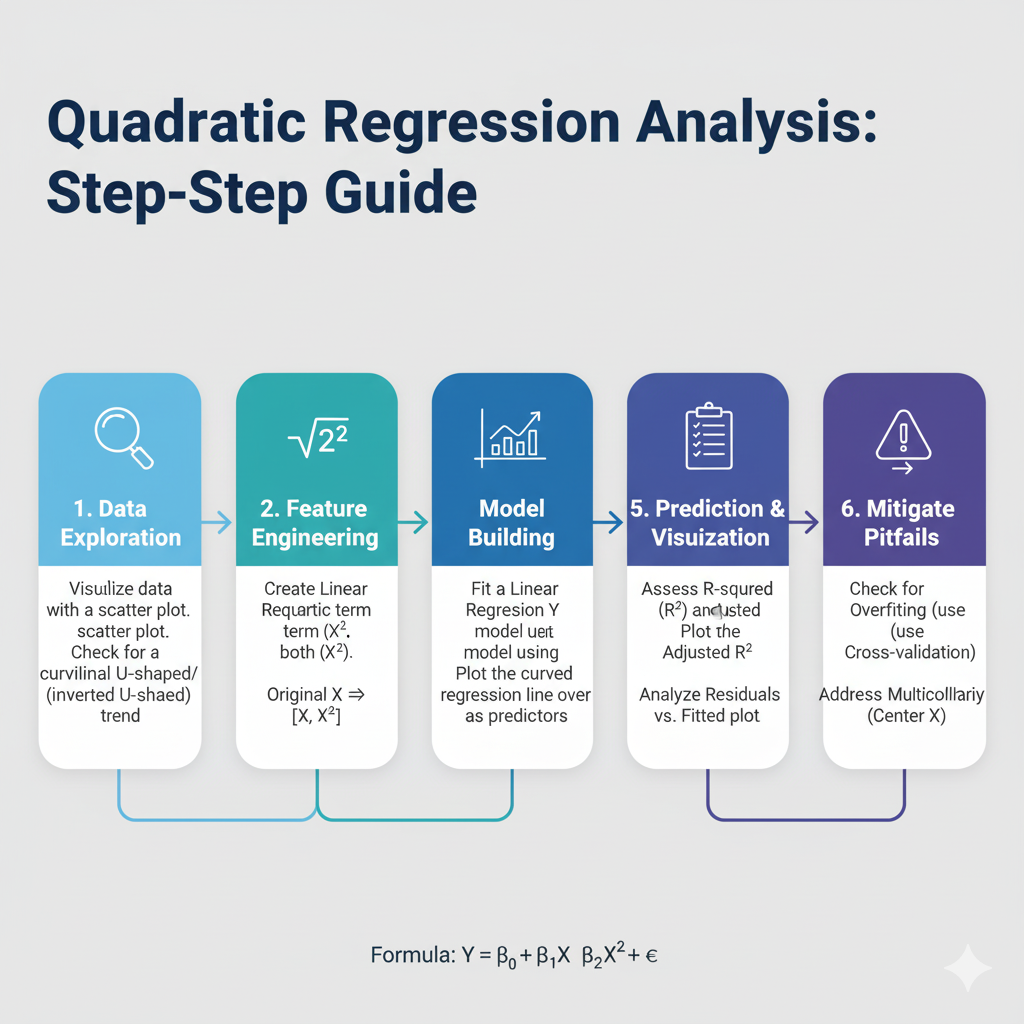
- Building regression and survival models
- Estimating treatment effects and interactions
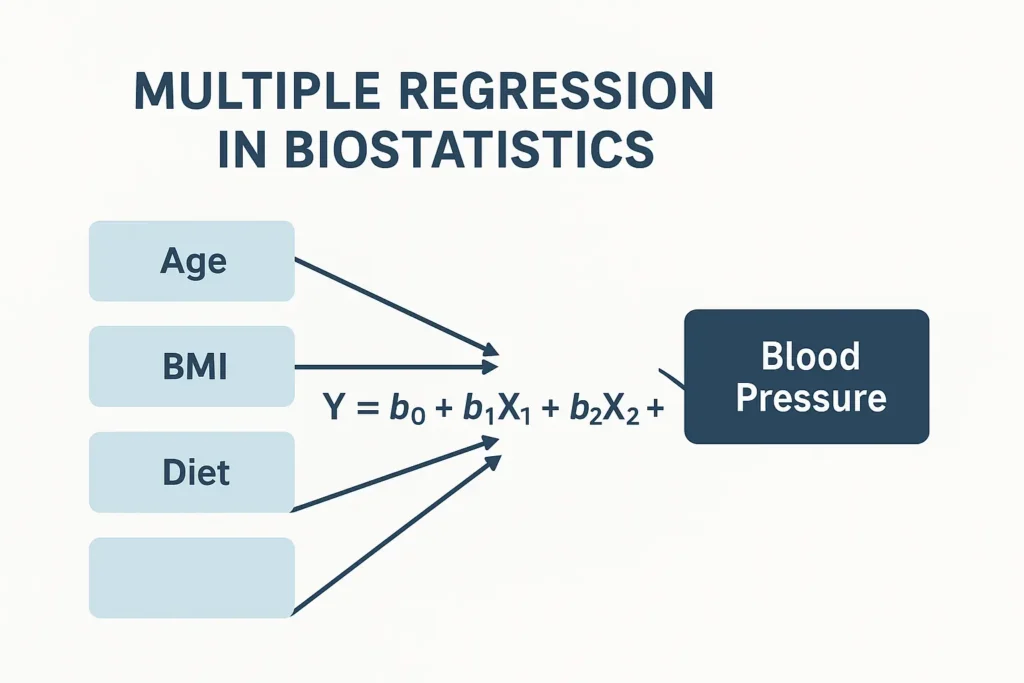
Example: A logistic regression model in biostatistics can predict disease presence (yes/no) based on variables like age, blood pressure, and cholesterol level.
2. What is Artificial Intelligence in Biostatistics?
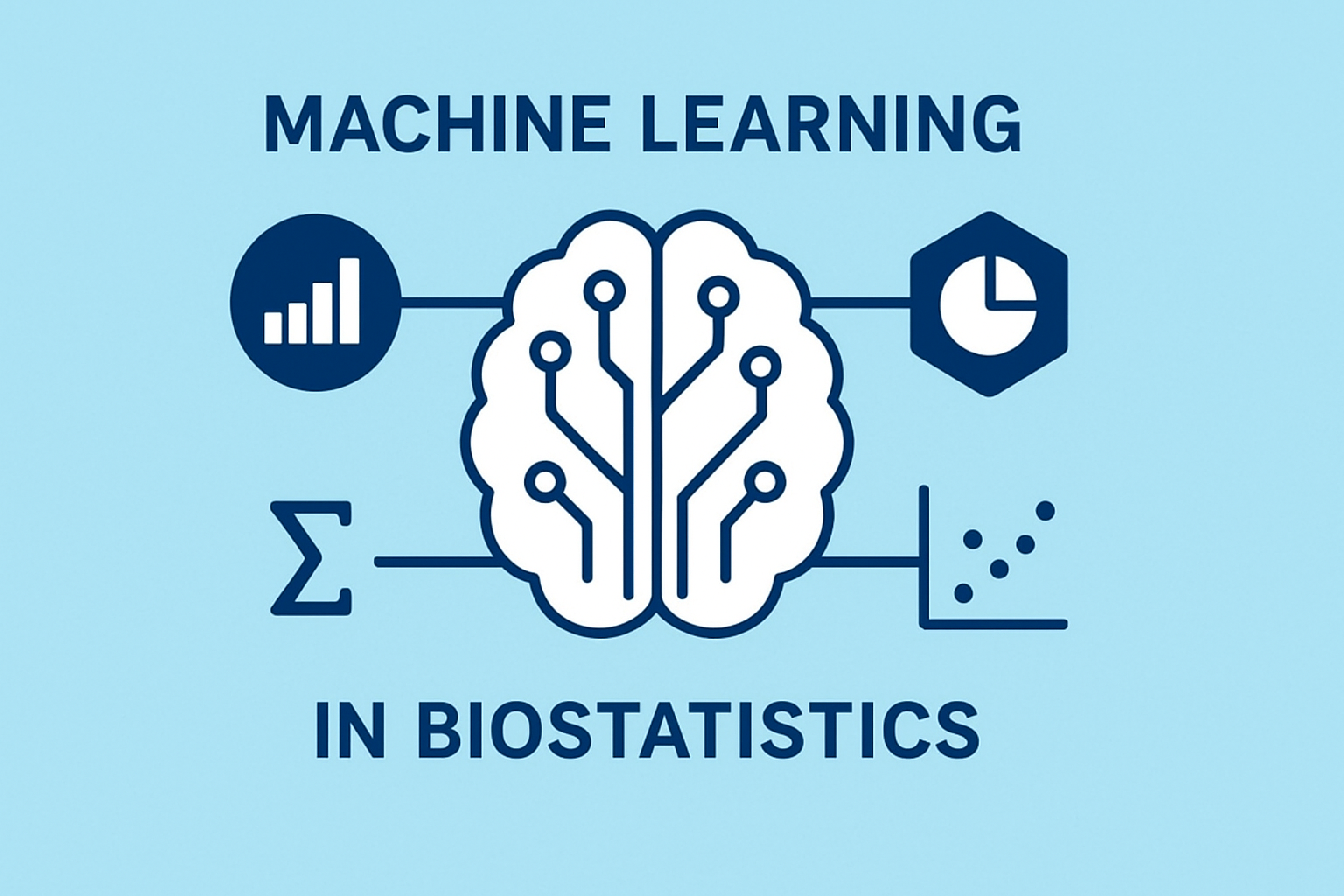
Artificial Intelligence (AI) refers to computer systems that can simulate human-like reasoning and learning. In biostatistics, AI is applied through machine learning (ML), deep learning (DL), and natural language processing (NLP).
These tools can:
- Detect hidden patterns in biomedical datasets
- Predict disease outcomes from clinical and genomic data
- Optimize statistical models for complex nonlinear relationships
- Automate data cleaning and feature selection
3. The Intersection of Biostatistics and AI
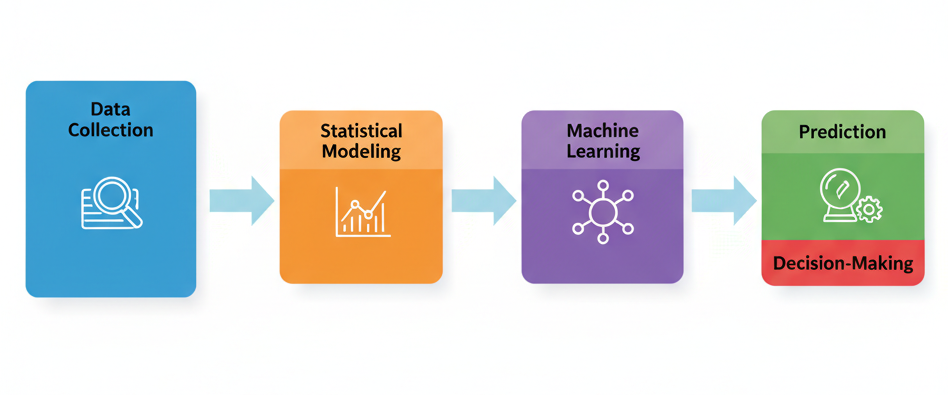
Traditionally, biostatistics relies on parametric methods such as t-tests, ANOVA, and regression analysis, which assume specific data distributions. AI, however, introduces non-parametric and data-driven learning approaches that can model nonlinear and complex relationships without prior assumptions.
Table 1. Comparison between Biostatistics and AI Approaches
| Aspect | Traditional Biostatistics | AI and Machine Learning |
|---|---|---|
| Data Type | Structured (small datasets) | Structured + Unstructured (large datasets) |
| Method | Parametric, rule-based | Non-parametric, learning-based |
| Goal | Inference and hypothesis testing | Prediction and pattern recognition |
| Example | Linear Regression | Random Forest, Neural Network |
4. Machine Learning Applications in Biostatistics
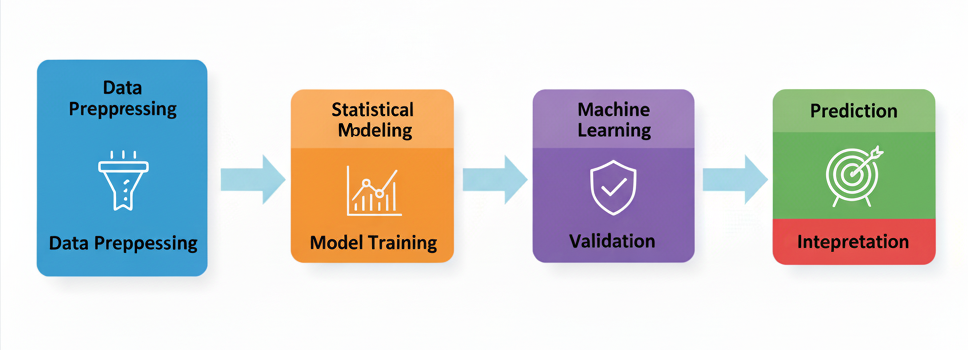
Machine learning is the most common AI technique used in biostatistics. Let’s explore how some algorithms contribute to biomedical research.
4.1. Supervised Learning
Used when the outcome variable is known.
- Example: Predicting cancer recurrence using logistic regression, support vector machines (SVM), or decision trees.
4.2. Unsupervised Learning
Used to explore unknown structures in data.
- Example: Cluster analysis to identify subgroups of patients with similar symptoms or genetic patterns.
4.3. Deep Learning
Deep neural networks can process complex biomedical signals (like ECGs or MRI scans) for disease detection or tumor classification.
5. Case Studies: AI Enhancing Biostatistical Analysis
Case Study 1: Predicting Diabetes Risk
A study used a Random Forest model trained on biostatistical variables (BMI, age, blood sugar levels) to predict diabetes with 92% accuracy — outperforming traditional logistic regression (85%).
Case Study 2: Genomic Data Interpretation
AI-driven clustering algorithms like k-means and t-SNE help biostatisticians visualize complex genetic datasets, leading to new insights into disease mechanisms.
Case Study 3: Clinical Trial Optimization
AI models analyze interim data in clinical trials, automatically detecting anomalies or suggesting adaptive design modifications, thus improving efficiency and ethical compliance.
6. Integration of AI in Biostatistical Software
Modern biostatistical software now integrates AI and ML modules:
Table 2. Biostatistical Software with AI Capabilities
| Software | AI Capability | Use Case |
|---|---|---|
| R (caret, mlr, keras) | Machine & Deep Learning | Predictive modeling and visualization |
| Python (scikit-learn, TensorFlow) | Deep learning, AI pipelines | Biomedical text and image analysis |
| SPSS Modeler | Neural networks | Healthcare analytics |
| MedCalc / GraphPad Prism | Statistical analysis | Baseline biostatistics |
| BioStatX (New Generation) | GUI-based hybrid system | Biostatistics + AI-assisted predictions |
7. Role of AI in Public Health Biostatistics
AI has become an essential part of epidemiological modeling and public health forecasting.
Examples include:
- COVID-19 prediction models using time series AI algorithms (ARIMA-LSTM hybrid models).
- AI-based outbreak detection systems that integrate biostatistical surveillance data with environmental and social indicators.
- Predictive modeling for hospital resource management and vaccine distribution.
These applications demonstrate that AI complements — not replaces — the statistical reasoning of biostatisticians.
8. Ethical and Interpretability Challenges
Despite its power, AI introduces challenges that biostatistics helps address:
- Data bias: AI models can amplify sampling errors or demographic imbalances.
- Transparency: Many AI models, especially deep learning, act as “black boxes.”
- Reproducibility: Biostatistical methods emphasize reproducibility, while AI models may vary across datasets.
- Ethics: Patient data privacy and algorithmic fairness are ongoing concerns.
Biostatistics ensures scientific validity and ethical accountability for AI-based decisions.
9. Future Trends: Biostatistical AI Revolution
Emerging trends include:
- Explainable AI (XAI): Making AI decisions interpretable using statistical validation.
- Bayesian Deep Learning: Combining probabilistic inference with neural networks.
- AI-Driven Meta-Analysis: Automating literature review and effect size estimation.
- Wearable and Real-Time Data Integration: Biostatistical models analyzing live patient data for preventive care.
10. Advantages of AI Integration in Biostatistics
Table 3. Benefits of AI in Biostatistics
| Advantages | Description |
|---|---|
| Faster data processing | Handles big data efficiently |
| Better prediction accuracy | Learns nonlinear relationships |
| Automated model selection | AI optimizes parameters automatically |
| Improved visualization | Advanced clustering and dimensionality reduction |
| Personalized medicine | Tailored predictions for individual patients |
Conclusion
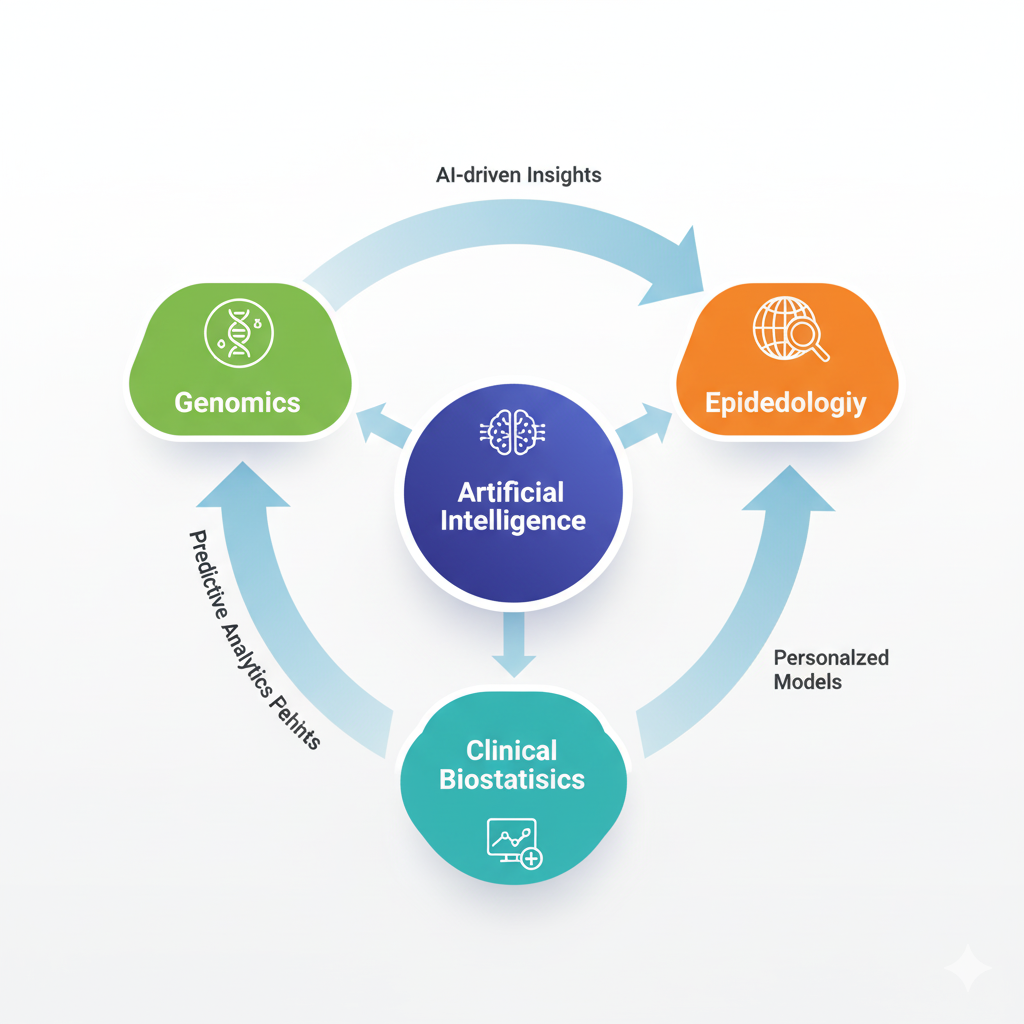
The integration of Artificial Intelligence into Biostatistics marks a revolutionary leap in biomedical data analysis. While traditional biostatistics focuses on hypothesis testing and estimation, AI extends its power by uncovering complex patterns and enhancing predictive precision.
However, the collaboration between statisticians and AI experts remains vital. Biostatistics ensures scientific rigor, while AI enhances computational capacity. Together, they form a powerful alliance for advancing healthcare, personalized treatment, and public health decisions.
In the future, researchers who master both biostatistical reasoning and AI tools will lead innovation in biomedical science.