Introduction
The McNemar test is a powerful non-parametric statistical method widely used in biostatistics and biomedical research to analyze paired nominal data. It is particularly useful when evaluating before-and-after scenarios, such as comparing diagnostic test results, treatment outcomes, or behavioral interventions in the same subjects.
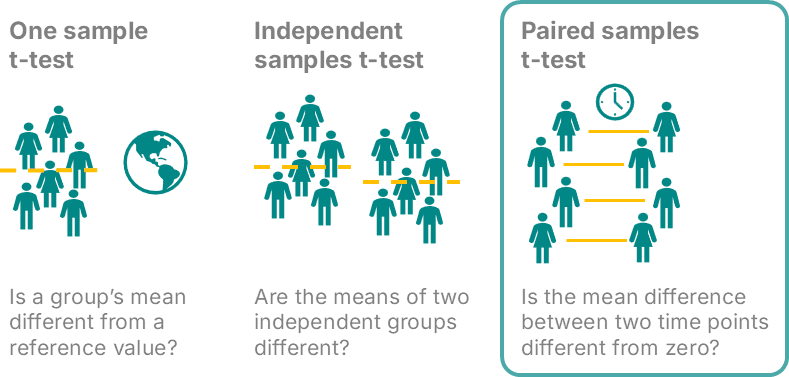
Unlike independent tests such as the Chi-square test, the McNemar test focuses specifically on dependent samples, where the same individuals are measured twice. This makes it highly relevant in clinical trials, epidemiological studies, and diagnostic accuracy assessments.
In this article, we provide a complete interpretation of your MedCalc McNemar test output, including data table explanation, statistical results, and biomedical significance. The analysis is based on your uploaded file and the corresponding visualization.
Understanding the Dataset
Your MedCalc output presents a 2×2 contingency table comparing:
- Old Test (Before)
- New Test (After)
Reconstructed Data Table
| Old Test (Before) | New Test Negative | New Test Positive | Total |
|---|---|---|---|
| Negative | 5 | 5 | 10 |
| Positive | 4 | 6 | 10 |
| Total | 9 | 11 | 20 |
Key Observations from the Table
- Total sample size (n = 20)
- Equal distribution in old test:
- 10 Negative (50%)
- 10 Positive (50%)
- New test results:
- 9 Negative (45%)
- 11 Positive (55%)
Discordant Pairs (Important for McNemar Test)
- Negative → Positive = 5
- Positive → Negative = 4
These discordant pairs are the core of McNemar analysis.
McNemar Test Results (From MedCalc)
According to your uploaded result :
- Difference: 5.00%
- 95% Confidence Interval: -24.32% to 34.32%
- P-value: 1.0000
Step-by-Step Interpretation
1. Difference in Proportions
The difference between discordant pairs is:
- (5 − 4) / 20 = 5%
👉 This indicates a very small change between old and new tests.
2. Confidence Interval (CI)
- Range: -24.32% to 34.32%
Interpretation:
- The interval includes 0, meaning:
👉 No statistically reliable difference - Wide CI suggests:
👉 Small sample size or variability
3. P-value Interpretation
- P = 1.0000
This is the most important result.
👉 Since P > 0.05, we:
- Fail to reject the null hypothesis
- Conclude that:
There is NO significant difference between the two tests
Hypothesis Testing
Null Hypothesis (H₀):
There is no difference between old and new test results.
Alternative Hypothesis (H₁):
There is a difference between the tests.
Decision:
- P = 1.0000 → No
Biomedical Interpretation
In a biomedical context, this result suggests:
- The new diagnostic test does NOT significantly improve or worsen results
- Both tests perform similarly
- Any observed change is likely due to random variation
Practical Example
Imagine this dataset represents:
- Old Test → Traditional diagnostic method
- New Test → Advanced screening tool
👉 Interpretation:
- The new method does not provide statistically better detection
- It may still be useful for:
- Cost efficiency
- Speed
- Ease of use
But not statistically superior
Why McNemar Test is Important in Biomedical Research
Applications:
- Diagnostic test comparison
- Pre-treatment vs post-treatment analysis
- Vaccine effectiveness studies
- Behavioral intervention studies
Advantages of McNemar Test
- Works with paired nominal data
- Simple and easy to interpret
- Focuses only on discordant pairs
- Ideal for small sample sizes
Limitations
- Cannot be used for independent samples
- Ignores concordant pairs (5 and 6 in your table)
- Sensitive to small discordant counts
- Limited to 2×2 tables only
Conclusion
The McNemar test analysis of your MedCalc output clearly indicates that there is no statistically significant difference between the old and new test results. Although a slight increase in positive outcomes was observed in the new test, the difference is minimal and not supported by statistical evidence (P = 1.0000).
The wide confidence interval further reinforces the uncertainty of the observed difference. Therefore, from a biomedical perspective, both tests can be considered equally effective, and any decision to adopt the new test should be based on practical factors such as cost, accessibility, and ease of use rather than statistical superiority.